

Why the Anthropic-Pentagon rupture is not corporate defiance
The February 2026 AI governance standoff


“Regardless, these threats do not change our position: we cannot in good conscience accede to their request.”
—Dario Amodei
On February 27, 2026, the Trump administration designated Anthropic — the American AI company behind Claude — a “Supply-Chain Risk to National Security.” The designation was triggered by Anthropic's refusal to remove, from its $200 million Pentagon contract, two safeguards: one barring the use of its AI for mass domestic surveillance of Americans; the other prohibiting autonomous weapons operating without human oversight.
“Supply chain risk” is a legal mechanism created by the Federal Acquisition Supply Chain Security Act of 2018 (FASCSA). The statute defines the term in expansive language, covering any attempt by an adversary to sabotage a federal national security system, to introduce malicious functionality, or to subvert its design and operation. To apply this designation to Anthropic — simply for exercising lawful contractual discretion — is to treat an American company as a foreign actor attempting to compromise U.S. defense systems. And that is the violence of the designation: it is coercion as method, intimidation as message, and vindictiveness as motive.
Since its enactment, FASCSA sat dormant for seven years. The first order was not issued until September 2025, against a Swiss cybersecurity firm with alleged ties to Russia. Five months later, Anthropic became the second company ever designated under this authority — and the first American company in the statute’s history.
The government, more precisely, the Department of Defense, invoked two narrow legal authorities to justify the move: one allowing the Secretary of Defense, Pete Hegseth, to exclude a company from defense contracts, and FASCSA itself. Yet on television, the Secretary went further, claiming that no company holding a military contract could do business with Anthropic at all, reaching beyond government dealings into private commerce.
But FASCSA carries no such reach — the Act was built to keep foreign adversaries out of federal systems, not to police commerce between American companies. The televised claim runs past the very statute it invokes.
Still, even within its actual statutory bounds, the designation carries profound weight. Every federal contractor performing military work must now determine whether Anthropic appears anywhere in their supply chain, report it, and remove it. The action does not merely serve the Pentagon’s direct relationship with the company; it sends a chilling ripple through the entire federal contracting ecosystem.
Anthropic was already serving the United States across the military, the intelligence community, and classified defense networks. Declining to enable domestic mass surveillance or autonomous lethal weapons is not a refusal to serve the country. It is an adherence to the Fourth Amendment and existing federal statutes. The judgment was not Anthropic's alone; it was the country's own legal framework, applied to algorithmic capabilities the law had yet to anticipate.
Then the double standard showed itself. Within hours of the standoff hitting the news, OpenAI secured its own Pentagon deal for classified networks, reportedly retaining the exact same safety provisions Anthropic was punished for defending. The same restrictions were accepted from one company and held against the other.
The apparent contradiction was striking, but the public discourse that followed missed the deeper structural fracture entirely. Media coverage, government rhetoric, and public debate converged on a reductive, dangerous framing: Should a private company or the federal government decide how military AI is used?
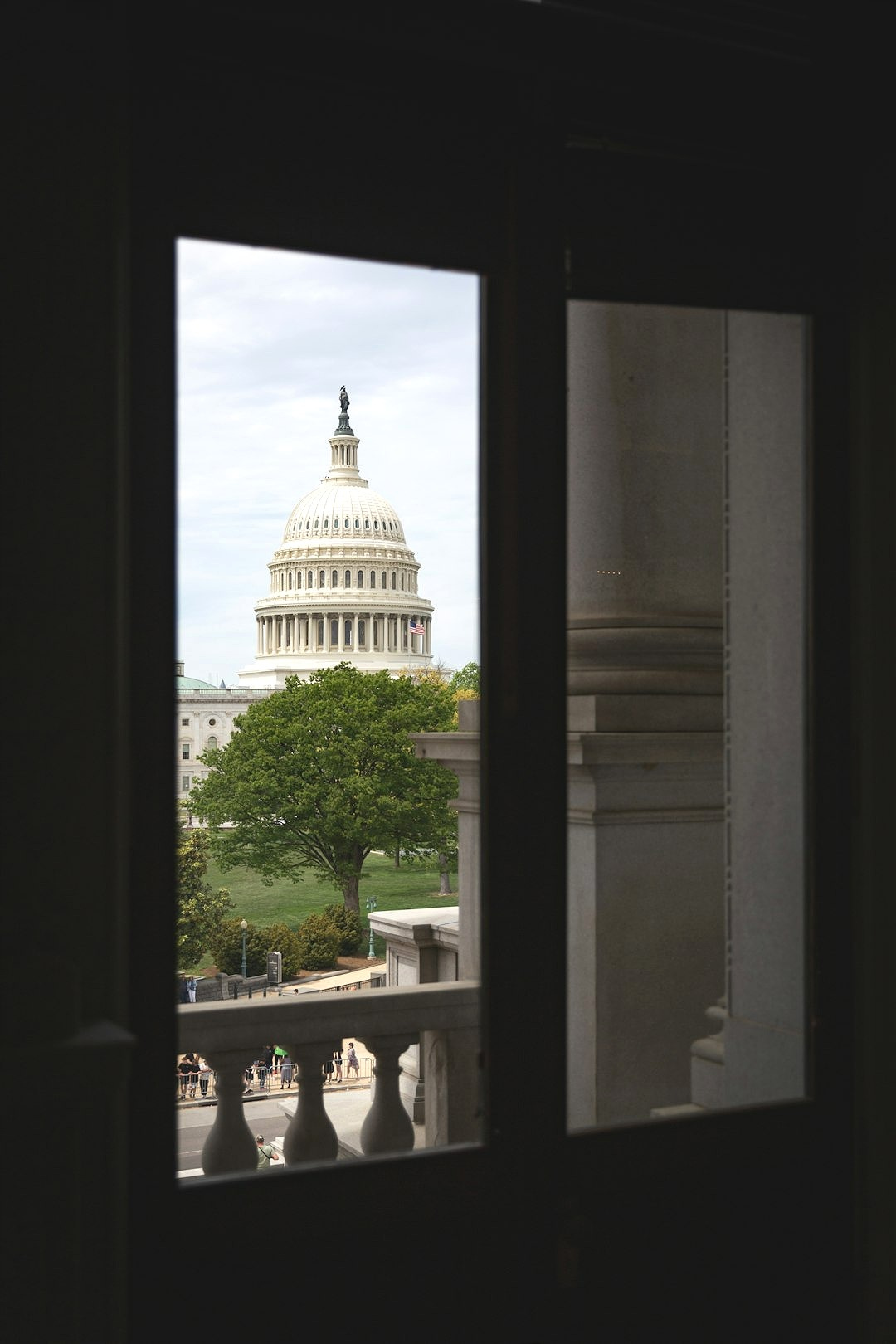
This false dichotomy erases the very institution engineered to make these decisions: the United States Congress.
The Binary That Obscures the Real Question—
The dominant narrative presented the breakdown as a confrontation between corporate power and executive authority — tech billionaires versus the Pentagon. A CBS interview with Anthropic CEO Dario Amodei on the evening of February 28 illustrated this pattern. The interviewer pressed repeatedly on a single axis:
“Why should a private company have more say than the Department of Defense?”
“Why should Americans trust a CEO over the federal government?”
The questions may sound reasonable until one examines what was actually said. Across a thirty-minute interview, Amodei made the same point again and again. He does not believe a private company should hold this authority permanently, and he explicitly stated that the technology had outpaced existing law, and that the fix is legislative, not corporate. Still, the interview stayed locked on its binary — corporate versus government — enforcing the very frame it should have questioned.
“I don’t think the right long-term solution is for a private company and the Pentagon to argue about this. I think Congress needs to act here. But Congress doesn’t move fast. So in the meantime, we do need to draw a line in the sand.
— Dario Amodei
When the public conversation about AI regulation is reduced to a power struggle between two actors — both operating without legislative mandate in this specific domain — the possibility of democratic oversight disappears from the discourse. And when it disappears from the discourse, it disappears from the political agenda.
Two Red Lines, Two Legislative Gaps—
Anthropic’s two restrictions are not arbitrary corporate preferences. They correspond to two areas where AI capabilities have overtaken the legal framework.
As Amodei details in his February 26 statement, current law allows the government to purchase detailed records of Americans’ movements, web browsing, and associations from public sources without a warrant — a practice the Intelligence Community itself has flagged as a privacy risk and one that has prompted bipartisan pushback in Congress. The practice is not illegal; it was simply not operationally useful before the era of large language models and advanced analytics. AI, however, changes the scope: powerful models can assemble scattered, individually innocuous data points into a comprehensive portrait of a person’s life, automatically and at massive scale. And the Fourth Amendment doctrine, along with existing federal statutes, has not caught up to what is now technically possible.
This same legal obsolescence extends to battlefields. Anthropic’s concern is not the partially autonomous systems already in use today. The concern is the fully autonomous systems that identify, select, and engage targets without any human involvement.
As Amodei argues with technical specificity, current AI systems are not reliable enough for this application. The unpredictability is fundamental, and anyone who has worked with these models recognizes it. Beyond reliability, accountability itself is at stake: with a fleet of coordinated autonomous systems operating under a single command node, the traditional hierarchy of military accountability — built on the assumption that human soldiers exercise judgment at multiple levels — collapses.
Neither of these concerns is ideological. Both are structural. And both point to the same inescapable conclusion that legislation has not kept pace with capability.
The Precedent Problem—
Anthropic proposed to work directly with the Department of Defense on R&D to prototype these systems in a controlled environment. The Pentagon declined unless it could deploy without restrictions from the outset.
The administration’s response to Anthropic’s position set a precedent that extends well beyond AI policy. The “supply chain risk” designation was deployed against an American company for exercising contractual discretion, and the message to every technology firm doing business with the federal government was unmistakable: compliance is not negotiated; it is compelled.
Here, the internal contradiction of the government’s own position deserves emphasis. It simultaneously threatened two actions that are logically incompatible: designating Anthropic a supply chain risk (labeling the company a security threat to be excluded) and invoking the Defense Production Act to compel continued service (labeling the company’s technology as essential to national security). A company cannot be both a threat to be quarantined and an asset to be conscripted. The coexistence of these two threats reveals that neither was grounded in a genuine security assessment, and that both were instruments of coercion.
The punitive character of the action, however, is further underscored by Anthropic’s broader conduct. This is a company that voluntarily forfeited several hundred million dollars in revenue by cutting off access to firms linked to the Chinese Communist Party (CCP), some of which had been designated by the Department of Defense as Chinese Military Companies. It likewise shut down CCP-sponsored cyberattacks targeting its systems and advocated for strong export controls on AI chips to maintain a democratic advantage. Whatever one thinks of Anthropic’s red lines, the suggestion that this company is a threat to American national security is not supported by its record.
If the precedent holds that a principled disagreement over two narrow use cases — representing, by Anthropic’s account, roughly one percent of deployed applications — can trigger a national security designation, then the space for any company to maintain safety restrictions narrows to zero.
“Disagreeing with the government is the most American thing in the world and we are patriots in everything we have done here. We have stood up for the values of this country.”
— Dario Amodei
What the Vacuum Held—
The administration’s action against Anthropic will likely be remembered as the moment AI governance became a national security flashpoint. The most damning indictment of this affair, though, is not what played out in public. It is what the public discourse refused to engage with: a legislative framework that renders these confrontations unnecessary.
The framework this dispute demands is not hypothetical. In March, Senator Elissa Slotkin — a former CIA officer who served three tours in Iraq — introduced the AI Guardrails Act of 2026 (S.4113). It would bar the Department of Defense from three uses of artificial intelligence: launching or detonating a nuclear weapon, deploying autonomous weapons that use lethal force without human authorization, and turning AI on the American people as an instrument of mass surveillance. Two of those three lines are the exact lines Anthropic drew. Slotkin said plainly what the affair had obscured: had these guardrails been law, none of this would have happened. The bill has no cosponsors. It has not moved.
So the line held, not because the law required it, but because one company chose to defend it. Defending the Fourth Amendment should not fall to a corporation. That it did is a measure of how far the public's own institutions have receded. The next line, and there will be a next line, should be ours to draw.