

Gratitude is not a substitute for justice.
— "What are we eating on Monday?"

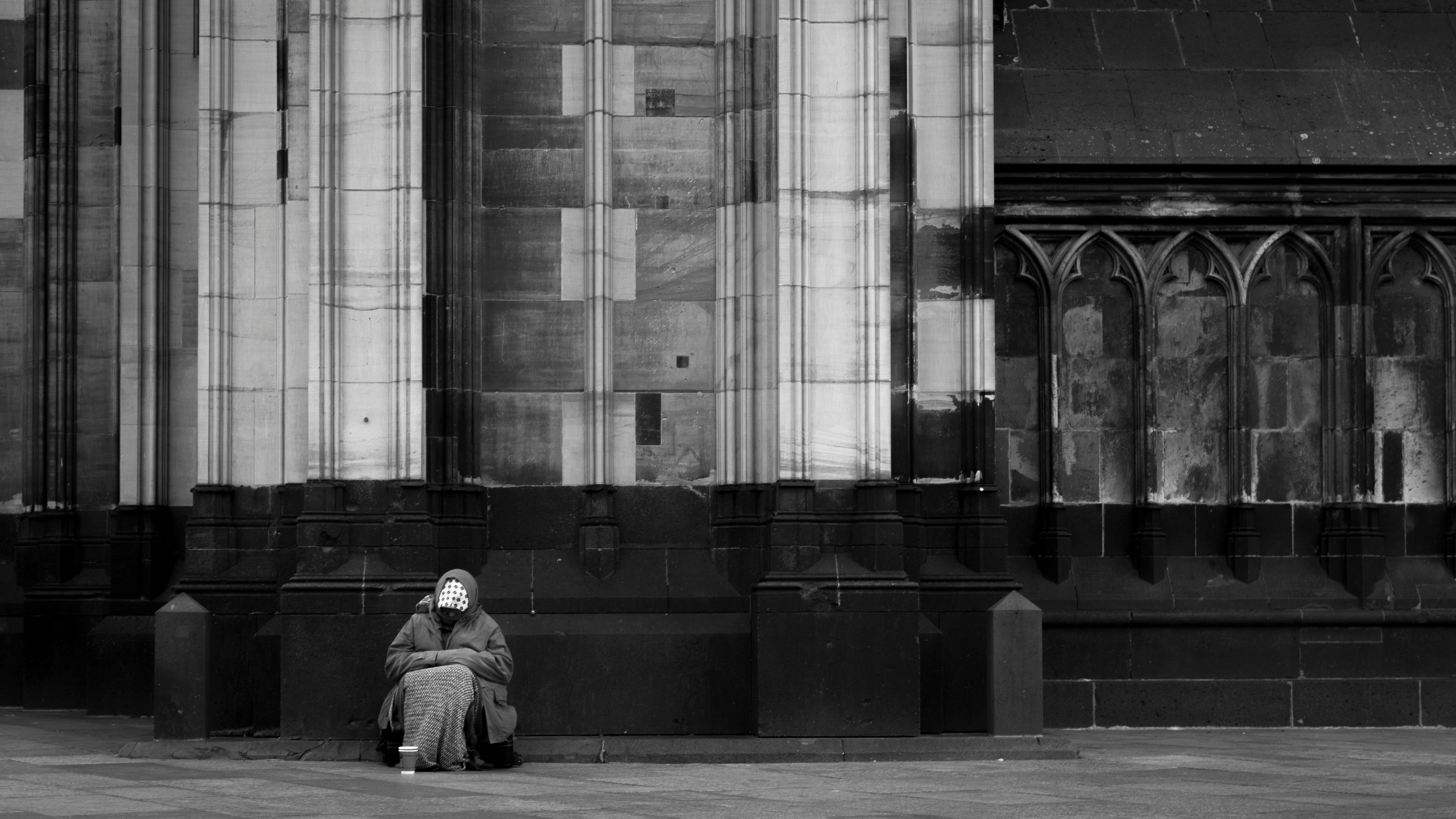
The final stretch of the year has begun, and with it, the holiday season. First in line: Thanksgiving. What is Thanksgiving supposed to mean in a nation of abundance, when millions of its people face empty plates, almost daily — or daily, period? This contradiction is not accidental. It is the result of choices — choices that prioritize profit over dignity.
Today is the last Thursday of November. It’s Thanksgiving. Airports across the country have been full for days. Grocery stores have been stripped of turkeys, cranberries, and the seasonal rolls that appear only in November. Somewhere, someone is arguing about politics at a table heavy with food. Somewhere else, someone is doing math. And the math goes like this:
“If I skip breakfast and lunch, I can make dinner last two days.”
“If I drink enough water, my stomach will stop asking.”
“If I chew gum long enough, the flavor becomes a kind of meal.”
— not nutrition, but compensation. A trick the body almost believes.
One in seven people in the 2025 United States of America knows this math, and they do not forget it. Once you learn to calculate hunger, the numbers stay with you — a constant negotiation between yourself and arithmetic.
“If I get this wrong, it is not an error. It is an empty plate.”
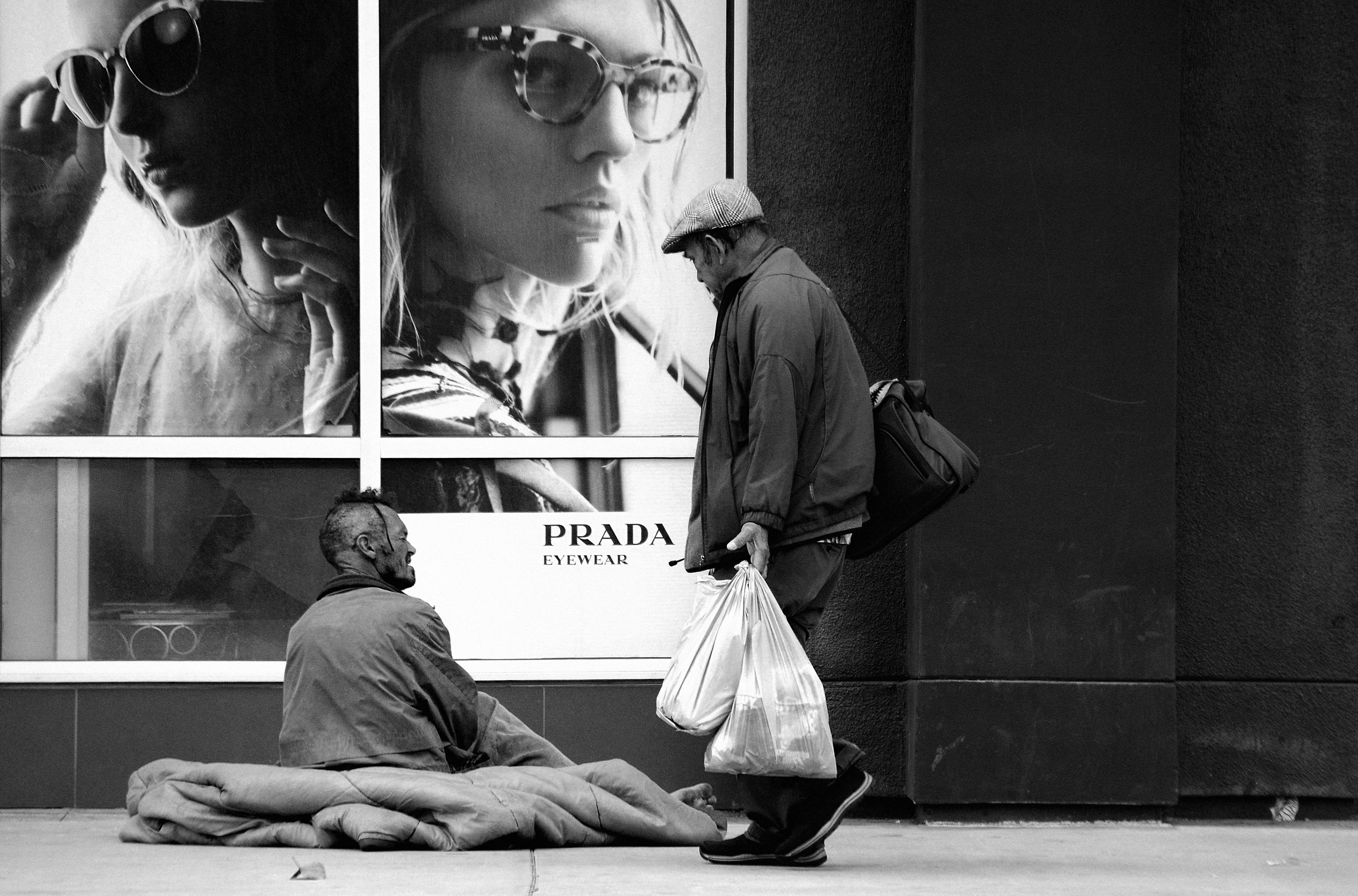
A man receives twenty-three dollars a month in food assistance.
— Twenty-three dollars.
He walks down 8th Avenue, past the bars and restaurants, and people assume he is going inside. He is not going inside. He is walking past, doing the math, wondering how a grown man is expected to sustain himself on less than a dollar a day.
A woman wanted to make chicken soup. She could not afford the chicken.
A mother has three children. She thinks about them constantly, not in the sentimental way people talk about on holidays, but in the way of someone who is failing a test she studied for her whole life. She did everything right — school, work, no drugs, no jail, no mistakes. Still, she cannot feed her family. And when she is with her daughter, she cannot be present. Hunger is louder than love, it takes up all the room.
The body has a setting for this. It is called power-save mode, a phrase borrowed from machines, applied now to… people. When there is not enough fuel, the system dims. Limbs become heavy. Thought becomes slow. There is a pain at the front of the head, something pressing against the brain, and it is not a metaphor.
It is Tuesday.
It is Wednesday.
Thanksgiving is on Thursday.
“What are we eating on Monday?”
Outside, it is cold. The kind of cold that requires decisions.
Heat or food.
Warmth or fullness.
Pick one.
You cannot afford both.
The thermostat becomes another equation, another negotiation with a body that is already conserving, already dimming, already learning to want less.
Thanksgiving is supposed to be about warmth.
Gathering.
Abundance.
A table surrounded by people you love, eating more than you need, grateful for the excess.
But gratitude requires a baseline. It requires something to be grateful for. And when the minimun is nothing — when the stomach is empty and the radiator is off and the math does not add up no matter how many times you run the numbers — gratitude becomes obscene. It becomes a word for people who have never had to choose.
A teacher went to food banks while employed. She stood in line with her students’ parents and learned something she already knew:
— you are not the only one.
You are not the only one skipping meals, not the only one lying awake
— calculating,
not the only one telling your children that
— dinner is enough, that…
— breakfast isn’t necessary, that…
— hunger is just a feeling and feelings pass.
Someone put groceries on a credit card.
Someone else knows there will be no Thanksgiving this year.
No turkey,
no stuffing,
no mashed potatoes.
No Christmas either.
Just the math, and the cold, and the slow dimming of the body’s expectations.
They say:
“pull yourself up by your bootstraps.”
But that requires boots.
It requires a floor to stand on.
It requires a body that is not running on empty, a mind that is not clouded by the particular fog of malnutrition, a life that has not been reduced to a series of impossible calculations.
There is a phrase for what this does: it kills hope.
You take away the ability
to feed themselves,
to feed their children,
to sit at a table and eat,
and you take away the reason to keep calculating.
The math becomes pointless. The numbers stop mattering.
Today is Thursday. Airports are full.
Somewhere, a table is heavy with food.
Somewhere else, someone is drinking water until their stomach stops asking. Someone is chewing gum.
Someone is choosing between heat and food.
Someone is doing the math,
over and over,
hoping this time the numbers will come out different.
They will not come out different.
One in seven.
In America.
In November.
In the cold.
“What are we eating on Monday?”
In September 2025, the U.S. Department of Agriculture announced it would end the Household Food Security Report — the primary tool for measuring hunger in America. Forty-seven million people are hungry. The government has decided to stop counting them. “You can’t end hunger by simply ignoring it. And now it’ll be harder than ever to find the many people in America who need help the most. (Emily Holzknecht and Adam Westbrook)”
* This essay was inspired by “America, the Hungry,” a New York Times Opinion Video by Emily Holzknecht and Adam Westbrook, published on November 27, 2025.